
.jpg)

Regional Household Food Insecurity Map

Unfortunately, households with child-level food insecurity were also on the rise this past year, up to 37%, compared to last year when there was a slight decrease to 33%. However, very low food security among children—when a child must skip meals or not eat for the whole day due to insufficient food—has stabilized.
These trends reflect the lingering impacts of the COVID-19 pandemic, the ongoing affordability crisis—particularly the rising costs for food, housing, and utilities—and two distinct shifts in public nutrition policy: first, the expiration of pandemic-era increases and flexibilities to food and nutrition assistance programs, and second,1,2 the recent changes to SNAP eligibility enacted in 2025.3
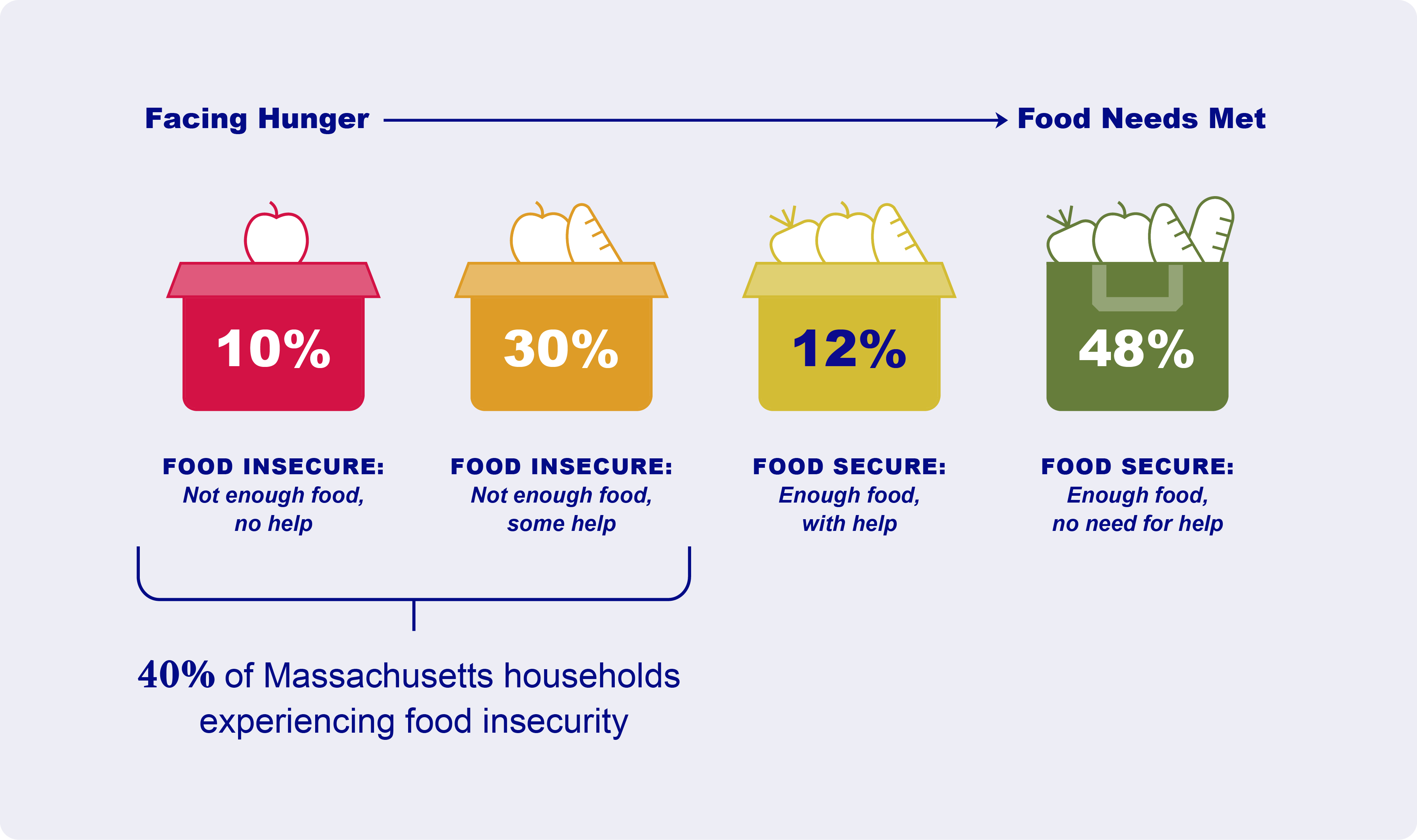
Household and Child-Level Food Insecurity

**2022–2025: measured using the 18-item USDA Household Food Security Survey Module (household-level). Beginning in 2022, child-level food insecurity was measured using the 18-item USDA Food Security Survey Module.


.jpg)